
In this guide
- Safety First
- How to Clean Gas Burner at Home: Step by Step
- How Often Should You Clean Gas Burners?
- Why Is My Gas Burner Flame Yellow or Uneven?
- How to Remove Kitchen Grease From Cabinets
- How to Clean Kitchen Tiles With Home Remedies
- Kitchen Hood and Exhaust Fan Filters
- How to Clean a Burnt Pot or Dish at Home
- Sink, Taps and Counters
- Daily Kitchen Cleaning Habits
- Common Kitchen Cleaning Mistakes
- When to Call a Professional
- FAQs
- Kitchen Grease Getting Out of Hand?
Pakistani cooking is delicious, and tough on kitchens. Tadka, frying and slow-cooked curries send oil into the air, where it settles on burners, tiles, cabinets and the exhaust hood. Over time it turns into a sticky, yellow layer that ordinary wiping can’t shift, and clogged burners start giving weak, uneven flames. This guide explains how to clean gas burner at home safely, then tackles the rest of the kitchen: greasy cabinets, tiles, glass, hood filters and burnt pots.
Safety First
Before you learn how to clean gas burner at home, follow these basic safety rules:
- Turn off the gas at the knob and the cylinder or main valve
- Let burners cool completely before touching them
- Never use a wire or nail to widen burner holes; it changes the flame and can be dangerous
- Dry every part fully before refitting it, because water in the burner causes uneven flames
- If you smell gas or the flame stays yellow after cleaning, call a qualified gas technician
How to Clean Gas Burner at Home: Step by Step
What You’ll Need
Baking soda, white vinegar, dish soap, a bowl of hot water, an old toothbrush, a pin or toothpick, and a soft cloth.
Step 1: Remove the burner caps and heads
Lift off the pan supports, burner caps and burner heads (brass or cast iron on most Pakistani stoves).
Step 2: Soak
Place the caps and heads in hot water with a squeeze of dish soap and two tablespoons of baking soda. For heavy grease, add half a cup of vinegar. Soak for 30–60 minutes.
Step 3: Scrub
Scrub with an old toothbrush, paying attention to the grooves and the flame holes. For stubborn black deposits, apply a thick baking soda paste and scrub again.
Step 4: Clear the holes
Gently clear each flame hole with a pin or toothpick, without forcing it or making the hole bigger.
Step 5: Rinse and dry completely
Rinse in clean water and dry with a cloth. Then leave the parts to air-dry for an hour, or until they’re completely dry.
Step 6: Clean the stove top
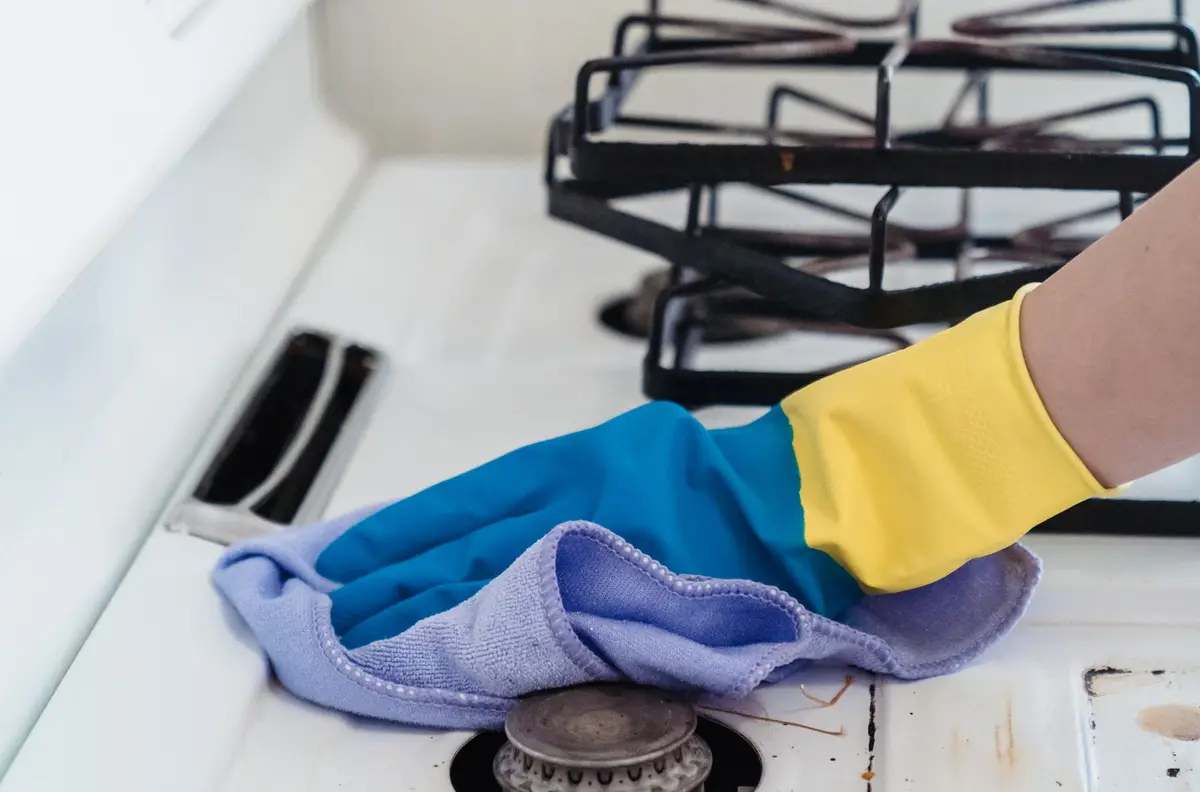
While the parts dry, wipe the stove surface with warm soapy water. For glass tops, use a soft cloth and a little baking soda paste, never steel wool, then buff dry.
Step 7: Refit and test
Put everything back in its correct position and test each burner. A clean burner gives an even blue flame.
How Often Should You Clean Gas Burners?
| Cooking habit | Stove top | Burner caps and heads |
|---|---|---|
| Daily cooking, frying often | Wipe after every use | Deep clean every 1–2 weeks |
| Daily light cooking | Wipe daily | Deep clean every 2–4 weeks |
| Occasional cooking | Wipe after use | Deep clean monthly |
Wipe spills immediately, especially milk and sugary sauces, which burn onto the burner and block the holes. Once you know how to clean gas burner at home and do it regularly, the job takes 15 minutes instead of an hour.
Why Is My Gas Burner Flame Yellow or Uneven?
- Clogged flame holes: grease and food spills block the gas flow; clean them as above
- Wet burner: parts refitted before drying
- Misaligned cap: the burner cap isn’t sitting flat
- Gas supply or air mix issues: if cleaning doesn’t fix it, call a technician
Knowing how to clean gas burner at home every few weeks prevents most of these problems.
How to Remove Kitchen Grease From Cabinets
Cabinet fronts near the stove collect a sticky film:
- Mix warm water with a few drops of dish soap, which cuts grease without damaging finishes.
- Wipe with a soft cloth, working from top to bottom.
- For stubborn spots, apply a paste of baking soda and water, leave it for 5 minutes and wipe gently.
- Wipe again with clean water and dry immediately; wood and laminate don’t like moisture.
Handles and edges collect the most grease, so use a toothbrush along the seams.
Greasy Kitchen Glass Cabinets
Spray a mix of equal parts vinegar and warm water with a drop of dish soap, wipe, then buff with a dry microfibre cloth or newspaper for a streak-free finish.
How to Clean Kitchen Tiles With Home Remedies
The backsplash behind the stove takes the most oil splatter:
- Spray a warm water, dish soap and vinegar mix on ceramic tiles (not marble), leave for 5 minutes, then wipe
- For thick grease, apply a baking soda paste, leave for 10 minutes, scrub gently and rinse
- Clean the grout lines with a toothbrush and baking soda paste
- Dry the tiles to finish
For tile and grout techniques in the bathroom, see our bathroom cleaning guide.
Kitchen Hood and Exhaust Fan Filters
Hood filters trap most of the oil from cooking and clog quickly:
- Switch off the power and remove the metal filters.
- Soak them in very hot water with dish soap and half a cup of baking soda for 15–30 minutes.
- Scrub with a soft brush, rinse and dry fully before refitting.
- Wipe the hood body with warm soapy water.
Clean the filters monthly if you cook daily; a clean filter removes smoke and smells much better.
How to Clean a Burnt Pot or Dish at Home
- Baking soda and vinegar: cover the burnt area with water, add a cup of vinegar, bring to a boil, remove from the heat, add two tablespoons of baking soda, then scrub once it stops fizzing
- Salt scrub: for cast iron, scrub with coarse salt and a little oil
- Overnight soak: hot water with dish soap softens most burnt food
Avoid steel wool on non-stick pans.
Sink, Taps and Counters
- Scrub the sink with baking soda and rinse with vinegar to remove stains and smells
- Remove limescale from taps with a vinegar-soaked cloth (chrome and steel only)
- Wipe counters daily; use only pH-neutral cleaners on marble or granite counters
Daily Kitchen Cleaning Habits
- Wipe the stove after every cooking session, while the grease is still soft
- Wash dishes the same day
- Run the exhaust fan while cooking and for 10 minutes after
- Empty the bin daily
- Mop the kitchen floor every day or two
Add these to your home cleaning checklist.
Kitchen ki safai roz thori thori karein: chulha, counter aur bartan, taake chiknai jamne na paaye.
Common Kitchen Cleaning Mistakes
- Cleaning burners while hot, or refitting them while wet
- Using steel wool on glass stove tops or stainless steel
- Using vinegar on marble or granite counters
- Soaking wooden cabinets with water
- Mixing bleach with vinegar or other cleaners
When to Call a Professional
Knowing how to clean gas burner at home and wipe cabinets keeps the kitchen manageable, but months of built-up grease on tiles, hoods and cabinets is hard work. A professional deep clean in Islamabad includes full kitchen degreasing (stove, backsplash, cabinet fronts and hood exterior) with the right products for each surface.
FAQs
How do I clean a gas burner at home?
Turn off the gas and let the burner cool, soak the caps and heads in hot soapy water with baking soda, scrub, clear the holes with a pin, rinse, dry completely, then refit.
Can I clean a gas burner at home with vinegar?
Yes. Adding vinegar to a hot water and baking soda soak helps dissolve grease and carbon on brass and cast-iron burner parts. Rinse well and dry completely before refitting.
Why does my burner give a yellow flame?
Usually clogged holes, a wet burner or a misaligned cap. If cleaning doesn’t fix it, call a gas technician.
What removes grease from kitchen cabinets?
Warm water with dish soap, and a baking soda paste for stubborn spots. Dry immediately afterwards.
How often should I clean the kitchen hood filter?
Monthly if you cook daily, or every two to three months with light cooking.
Kitchen Grease Getting Out of Hand?
If your kitchen needs more than a weekend scrub, let our team handle it. Send photos on WhatsApp for a deep cleaning quote.


